 Skip to content
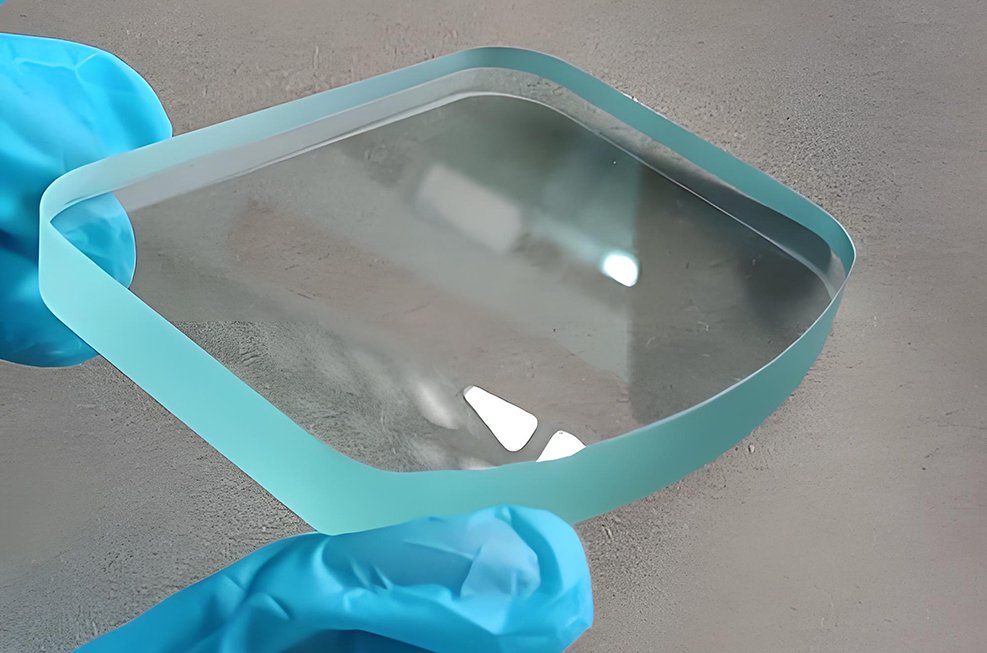
Custom Coated Glass Solutions: AR, UV, IR, AF, and High Reflective Coatings
Precision optical components require high-performance custom glass processing tailored to demanding industrial applications. Electronic display manufacturers and tech hardware engineers rely on specialized surface treatments to enhance display clarity, energy efficiency, and structural durability. Advanced coating technologies—including Anti-Reflective (AR), Anti-Fingerprint (AF), Ultra-Violet (UV), and Infrared (IR) cut coatings—transform standard substrates into high-value optical components.
Understanding how custom glass coatings operate, alongside CNC shaping and tempering techniques, is essential for selecting the optimal optical solution for electronic displays, smart devices, and precision instruments.


Understanding Advanced Optical Coatings: AR, UV, IR, and AF
Optical surface coatings dictate how light interacts with a custom glass substrate. Modern manufacturing utilizes Vacuum Electron Beam Evaporating and Magnetron Sputtering to deposit precise thin-film layers that control transmission, absorption, and reflection across visible and non-visible light spectrums.
Anti-Reflective (AR) Coating: Increases light transmission up to 98% or higher while reducing surface reflections. AR coatings prevent glare on electronic displays, touchscreens, and camera lenses, ensuring clear visibility under direct sunlight or harsh illumination.
Anti-Fingerprint (AF) / Oleophobic Coating: Applies a nano-scale hydrophobic layer that repels oils, water, and smudges. AF coatings significantly improve tactile smoothness and render touchscreens effortless to clean.
UV and Infrared (IR) Filters: Block unwanted electromagnetic radiation. UV-cut coatings protect internal sensors and liquid crystal layers from UV degradation. IR bandpass filters—such as BP830nm, IR850, and IR1000—selectively allow specific near-infrared wavelengths to pass while blocking ambient noise, making them crucial for LiDAR systems, facial recognition sensors, and security cameras.
High Reflective (HR) Coating: Utilizes dielectric or metallic thin films to reflect maximum light across targeted spectrums, commonly applied in optical mirrors, heads-up displays (HUD), and beam splitters.


Comprehensive Processing Capabilities for Custom Glass Components
Achieving an optimal component requires combining advanced optical coatings with precise physical fabrication. Modern manufacturing facilities integrate complete mechanical processing, chemical treatments, and optical testing to deliver fully customized shapes and structures:
CNC Precision Shaping and Edge Grinding: High-precision CNC machining enables intricate outer shapes, beveling, step-edge cutting, 2.5D/3D contoured edges, and internal cutouts.
Micro-Hole Drilling and Glass Hole Punching: Advanced laser micro-machining and CNC diamond core drilling allow accurate hole creation for sensor cutouts, camera apertures, and mechanical mounting points.
Chemical and Thermal Tempering: Toughening processes significantly enhance impact strength and scratch resistance. Chemical strengthening (ion exchange) is ideal for ultra-thin substrates used in smartwatches and handheld displays.
Etching and Chemical Matting: Controlled acid etching achieves anti-glare (AG) surfaces or creates fine micro-structures for diffuse lighting applications.
Dust-Free Screen Printing and Electroplating: High-precision silk-screen printing applies opaque bezels, logos, and conductive patterns in Class 1000 cleanrooms to eliminate particle contamination.
Glue-Free Micro-Pore Glass Bonding: Allows seamless fusion of glass-to-glass or glass-to-zirconia ceramic substrates without adhesives, ensuring optical clarity and long-term stability under high temperatures.
Industrial Applications Across Electronics and Optical Systems
Engineers specify engineered custom glass substrates across diverse high-tech industries:
Panel Glass and Electronic Displays: Rugged cover glass for industrial control panels, medical touchscreens, interactive kiosks, and automotive dashboards equipped with AR and AF coatings.
Smartphones, Mobile Screens, and Smartwear: Ultra-thin, chemically strengthened cover glass engineered for mobile displays, wearable smart bands, smartwatches, and full-glass watch cases.
Security and Imaging Systems: High-transmittance optical glass, IR bandpass filters (BP830nm, IR850, IR1000), and weather-resistant camera window covers designed for surveillance cameras and optical sensors.
Optical Equipment and Lighting: Precision lenses, high-power flashlight covers, architectural lighting glass, and custom mirrors requiring high thermal stability and HR coatings.
Crafts, Accessories, and Specialty Glass: High-purity glass used in jewelry accessories, negative ion specialty glass, and precision zirconia ceramic hybrid components.
Selecting the Ideal Custom Glass Partner for OEM Projects
Choosing the right manufacturing partner ensures that your custom glass components meet strict engineering tolerances and optical performance metrics. From initial prototype design to mass production, high-yield manufacturing relies on rigorous quality control, automated spectrophotometer inspection, and complete in-house processing capabilities.
Partnering with an experienced OEM manufacturer provides access to tailored coating designs, custom dimensions, chemical strengthening, and precision screen-printing designed specifically for your end-user device requirements.
