 Skip to content
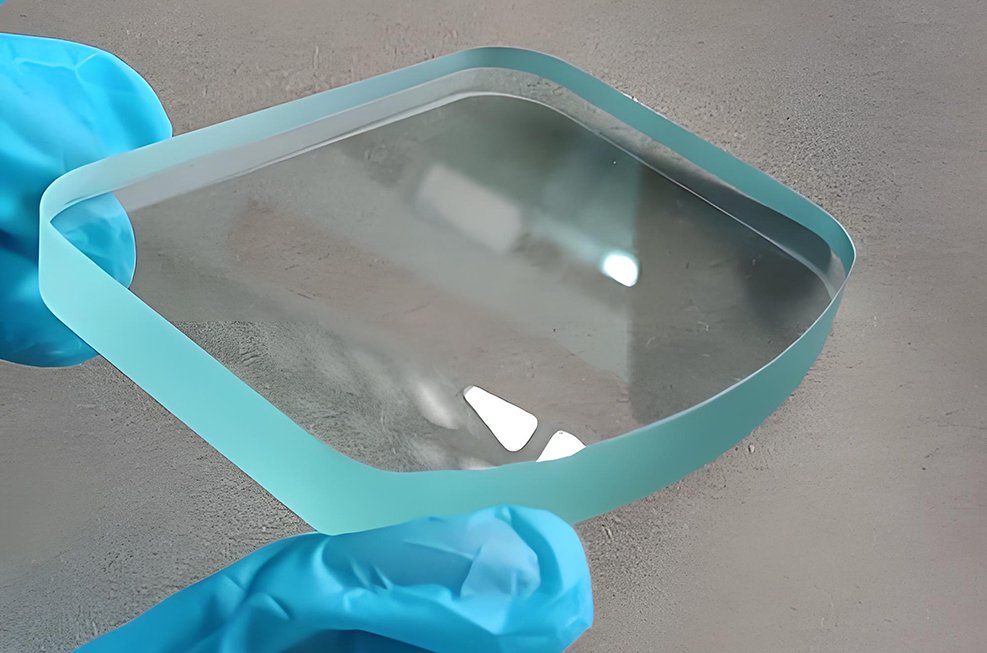
Introduction to Stepped Glass for Electronics Industry
In modern electronics manufacturing, precision and structural innovation are essential for product performance and aesthetics. Stepped Glass has become a key material for advanced device assemblies, offering both functional and visual advantages. Many electronic brands now rely on Stepped Glass to achieve seamless integration between protective surfaces and internal components.
As a professional glass processing factory, we specialize in producing high-precision Stepped Glass solutions for global OEM and ODM customers. The demand for Stepped Glass continues to grow as industries shift toward thinner, more complex device structures requiring customized glass shaping.

- Optcial Dome for Security Camera Lens
- Matt Stepped Glass

- HD Lens Protective Glass
- Water-Proof Support

- AR/AF

- Round Edges
- Printing

- Precision Stepped Glass
- Polished Glass

- Bridge Glass
- Optical Lens Glass
- AR/AF

- Notched Glass
- Colorful Coating

- Haven’t to be Polished

- Medical Optical Square Hole 0.2mm
- Lens Protective Glass
- Optical Coating
- AR/AF/IR/UV
What Is Stepped Glass?
Stepped Glass refers to specially processed glass with multiple depth levels or “steps” created through precision CNC grinding, polishing, and cutting techniques. This structure allows the glass to fit perfectly into complex device housings.
Unlike standard flat glass, Stepped Glass provides dimensional variation that improves assembly accuracy and mechanical stability. In many electronic applications, Stepped Glass is used where different thickness levels are required to support sensors, displays, or sealing structures.
The engineering precision behind Stepped Glass ensures tight tolerances, smooth transitions, and high durability, making it ideal for industrial-grade applications.
Manufacturing Process of Stepped Glass
The production of Stepped Glass requires advanced CNC machining and strict quality control. Each piece of Stepped Glass begins with high-quality raw material selection to ensure optical clarity and strength.
During processing, Stepped Glass is shaped using multi-axis CNC equipment to achieve precise step depths and angles. After shaping, each Stepped Glass component undergoes edge polishing, ultrasonic cleaning, and inspection.
For high-end electronics, Stepped Glass may also receive additional treatments such as anti-glare coating, anti-reflective coating, or chemical strengthening to enhance durability. Every stage of Stepped Glass production is carefully monitored to ensure consistency and dimensional accuracy.
Applications of Stepped Glass in Electronics
Stepped Glass is widely used in various electronic devices due to its structural flexibility and high precision. In consumer electronics, Stepped Glass is commonly found in display windows, camera modules, and smart device covers.
Industrial equipment also relies on Stepped Glass for control panels, instrument covers, and protective viewing windows. Because Stepped Glass can be customized to fit complex designs, it is especially valuable in compact electronic systems.
In automotive electronics, Stepped Glass supports dashboard displays and sensor housings, ensuring both durability and aesthetic integration. The versatility of Stepped Glass makes it a preferred choice across multiple high-tech industries.
Advantages of Stepped Glass Solutions
One of the main advantages of Stepped Glass is its ability to support multi-level structural design. This improves assembly efficiency and reduces the need for additional supporting components.
Stepped Glass also enhances product durability by distributing stress more evenly across the surface. In addition, Stepped Glass offers excellent optical clarity, making it suitable for display-related applications.
Another benefit of Stepped Glass is its compatibility with surface coatings, allowing manufacturers to improve anti-scratch, anti-fingerprint, and anti-reflective performance. These advantages make Stepped Glass a reliable choice for demanding environments.
OEM and ODM Customization Services
Our factory provides full OEM and ODM services for Stepped Glass, supporting customers from design to mass production. Each Stepped Glass project is tailored according to technical drawings, prototypes, or application requirements.
We offer flexible customization for Stepped Glass, including thickness variation, step geometry, edge finishing, and surface treatment options. Whether for small batch sampling or large-scale production, our Stepped Glass solutions ensure consistent quality and fast delivery.
By working closely with clients, we ensure every Stepped Glass product meets strict industrial standards and application needs.
Quality Control and Precision Standards
Quality is critical in Stepped Glass manufacturing. Each piece of Stepped Glass undergoes multi-stage inspection, including dimensional measurement, surface defect detection, and stress testing.
We use advanced metrology tools to verify that every Stepped Glass component meets precise tolerances. This ensures that Stepped Glass performs reliably in high-demand environments such as electronics, automotive systems, and industrial equipment.
Our commitment to quality guarantees that every Stepped Glass product delivers stability, precision, and long-term durability.
Conclusion
As electronic devices continue to evolve, the demand for high-precision structural materials will keep increasing. Stepped Glass plays a vital role in enabling compact, durable, and high-performance product designs.
With advanced manufacturing capabilities and strict quality control, we provide reliable Stepped Glass solutions for global electronics manufacturers. Choosing professional Stepped Glass processing ensures better product integration, improved durability, and enhanced design flexibility for modern applications.
Table of Text - Table of Text - Textverzeichnis
Toggle
